

Left Out
On potential, rejection, and the work that endures

A couple of weeks ago, I cleaned out more of my home office, sifting through old papers and notebooks that hadn’t been touched in years. Tucked in a folder was a collection of letters I received when I was a reporter at a small daily newspaper in my early twenties. It was my first job out of college, and while I learned a lot there, I also hated it for a variety of reasons that you can read more about here (Worst Jobs, Best Lessons). These notes and letters of appreciation thanked me for articles that helped with fundraisers, school programs, the police K-9 program, the library and literacy programs, and so on. And even though many of them read like form letters, someone still took the time to type or write them—and mail them, with a stamp—which left me feeling like it hadn’t been all bad, like the work I’d done at the newspaper had mattered.
One note stood out. Little birds and bird houses illustrate the envelope, and the handwriting inside is closer to calligraphy. The note thanks me for an article I’d written about the Individual Potential Program at the elementary school I attended—a program I was never selected for—and how sharing my experience helped heal old hurts the writer’s children carried because they’d been rejected from the same or similar programs.
To think that something I’d written had helped heal old hurts. It took a little of my breath, to be honest.
The other letters I saved in a folder. This one—I set aside.

I remember the Individual Potential Program and why I’d written about it. As a reporter, I was back at my elementary school frequently for school committee meetings and programs, and it brought back memories. Many of those memories circled around my academic abilities. I struggled in school early on. The teachers told my parents that I did excellent work, but very slowly. If they pushed me to work faster, the work fell apart. My mother’s answer: don’t push her. I had trouble reading—I could read, but I couldn’t tell you what a book was about. And math—forget it! One math teacher made us stand in line at her desk so she could tell us what we did wrong on our worksheets, quizzes, and tests. All class long, the line got shorter and shorter, as kids grasped the material. Guess who was always in line?
In seventh grade, my first year of middle school, a weird thing happened: School became suddenly easy and I earned straight As for the first time. At the time, I remember thinking that my elementary school was just really hard. But now I know that my brain just wasn’t quite organized for school yet.
My struggles in elementary school meant I never made it into the Individual Potential Program, the program for the talented and gifted that started at my elementary school in the 1970s. The kids in this program got to leave class for a whole day each week to work on special projects in math, science, and reading. They put on plays, made intricate dioramas, and wrote stories.
The one close brush I had with the program was delivering a line in one of their plays.
I graduated from high school in the top ten, and my classmates kept asking if I’d been in that Individual Potential Program, convinced that I had been. Only one student in the top ten was. I went on to graduate with high honors from a top college and build a successful career and fulfilling life.
The point I made back then, and that perhaps helped heal old wounds, is that “gifted” and “talented” are so subjective and such malleable qualities. Who can really say who is and who isn’t? Especially at such young ages?
Personally, I don’t buy these labels. I’ve never understood talent. What I understand is work.
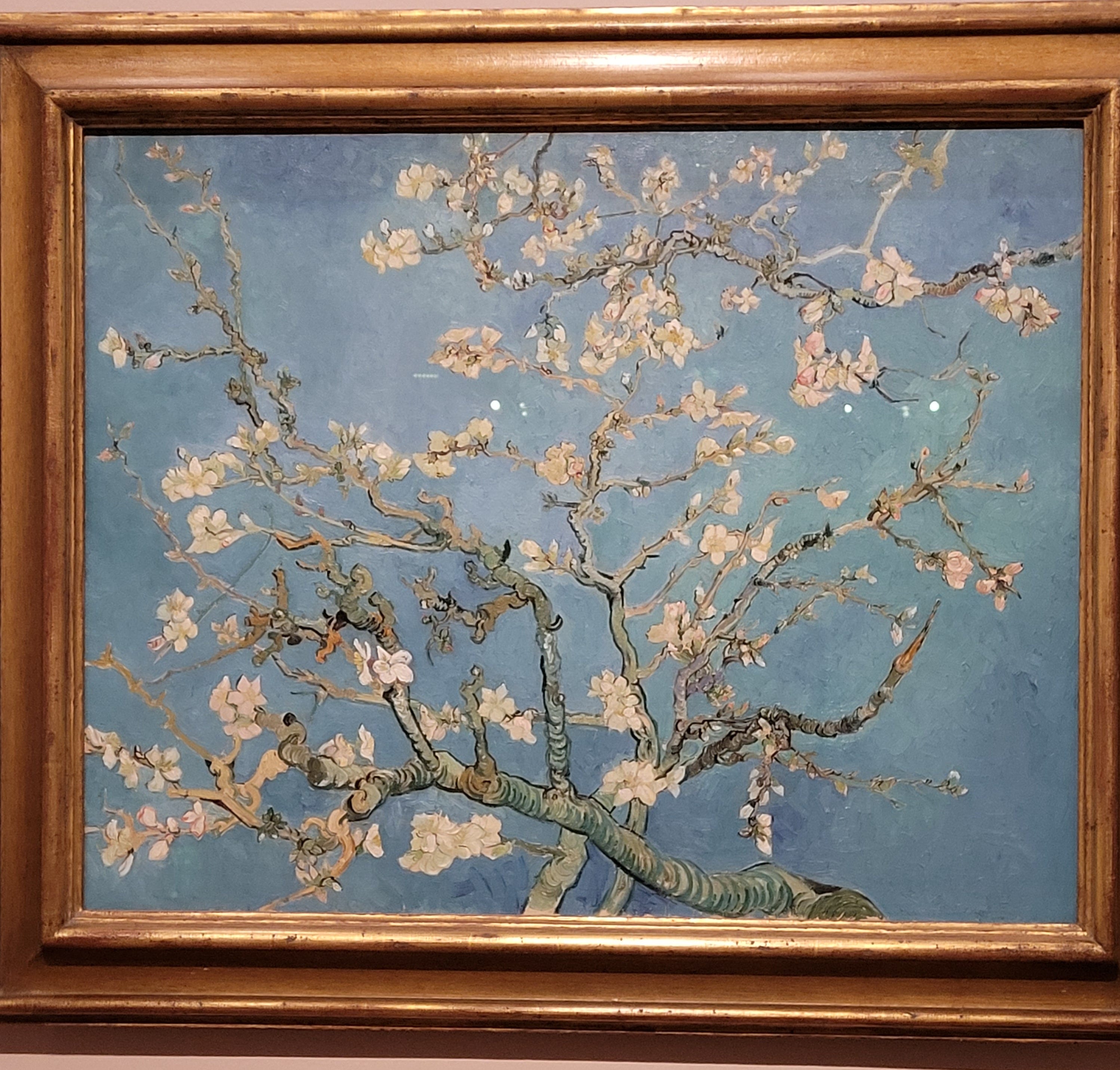
There is such a thing as natural ability. But even someone with an innate athletic, artistic, musical, you-name-it ability will lose it if they don’t work at it. Vincent Van Gogh is my favorite example of this idea: an amazing talent, but he did the work. In ten years, he produced over 900 paintings (about one painting every four days) and 1,100 drawings. During his time in the Saint-Rémy asylum, he produced about 150 paintings in a year, or one every two to three days. Van Gogh’s mental health—not great, I’ll grant that. But still, he knew the value in doing the work. He is my role model for putting my butt in the chair and getting the work done.
As an individual contributor and as a leader, my mantra has always been: Do the work. Because the work will stand for itself.
So, whether it’s in my professional life or my creative life, I do the work. To me, talent doesn’t come into it. It’s just doing the work.
My column for the newspaper reflected on a rejection of sorts, and the note I found was a reminder that I wasn’t alone in that feeling. Lately, I find myself reflecting on rejection once again, this time as a professional. After being laid off in December last year, everything I believed about hard work, dedication, experience—and yes, even talent—has come into question. I did the work—I worked hard, and I still found myself on the outside, at a turning point not of my choosing.
My community of friends and colleagues—a chosen family for whom I am deeply grateful—told me over and over that I’d land on my feet soon enough. But I’ll admit, I wasn’t so sure. Life’s sharp turns have a way of not only upending long-held beliefs but also shaking confidence to its core and feeding the furnace of imposter syndrome.
Here’s what I’ve learned: Doing the work has served me. I have landed on my feet because of it, and now I’m looking forward to starting a new position soon—one that I’m truly excited about, working with terrific people at an impressive institution that’s doing great work. It’s going to be fulfilling—and fun!
These labels—gifted, talented, high potential—they’re positive, used to shine a spotlight on our achievements. And that’s great. As long as we remember that spotlights leave much in shadow.
The teachers in charge of the Individual Potential Program at my elementary school couldn’t imagine a girl who struggles with reading becoming a marketing communications professional who reads three books at a time, and writes books, too. They couldn’t imagine a girl who stood in line at the math teacher’s desk over and over again managing budgets. They couldn’t possibly know the true trajectory, the true latent potential of grade schoolers just waiting to be ignited by the right teacher, the right book, the right movie or museum.
The rug was pulled out from under me in December, and after weeks of self-reflection, wondering if I even have talent, that letter I found reminded me that these labels cannot possibly tell the whole story of our worth.
Only the work can do that. The work matters and stands for itself.
Here’s to what’s next,
Judy
Great job framing your thoughts - then, and now - and magnifying the connections. Your writing talent is clear (no matter how long it took to develop that transparency), and relatable - which is something all of us - writers, readers, critics, family - can understand (deeply)…
So glad to hear you’re starting a new opportunity soon - best wishes! - and looking forward to your next piece - you’ve got me and a lot of other folks hooked!
Blessings!!
Thanks for sharing, Judy! I always appreciate your perspective.